Advanced on page SEO made simple.

Powered by POP Rank Engine™
Includes AI Writer
7-day refund guarantee
ChatGPT reads your page, evaluates it, and cites someone else 85% of the time. Here's the mechanism behind it - and why our methodology already accounted for it.
By Kyle Roof, Co-Founder of PageOptimizer Pro
Here's a number that should bother you.
AirOps analysed 548,534 pages that ChatGPT retrieved while answering 15,000 prompts. It cited 15% of them.
The other 85% were found. Read. Evaluated. And discarded.
So it's not that AI can't find your page. It found it, considered it, and recommended someone else instead. Researchers have started calling those pages "ghost traffic" - read by the machine, invisible to the human.
The question is why. And the answer is a mechanism most SEOs are only now hearing about.
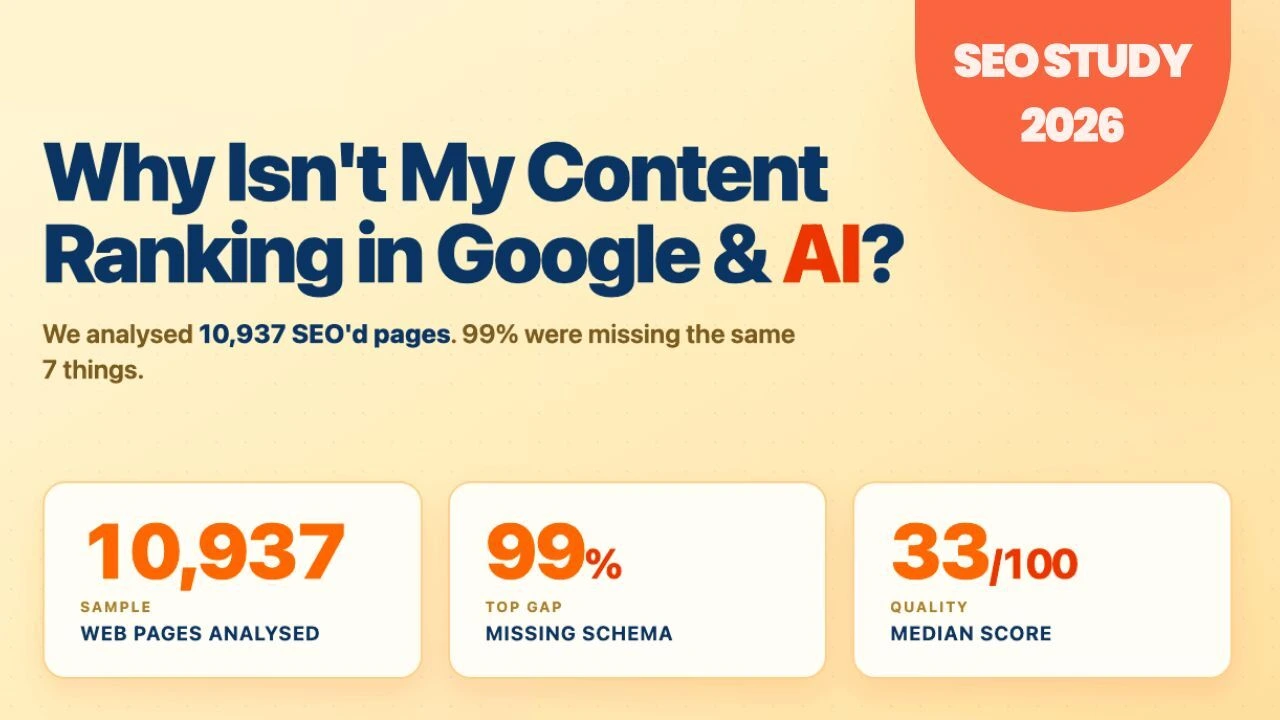
We analysed 11 industries. One averaged a POP Score of just 14.8 out of 100. Where does yours rank?
See how your industry compares, where the biggest gaps are, and which basics competitors still miss.

%20(1).png)

Which is the best LLM for SEO content?
Get the full rankings & analysis from our study of the 10 best LLM for SEO Content Writing in 2026 FREE!
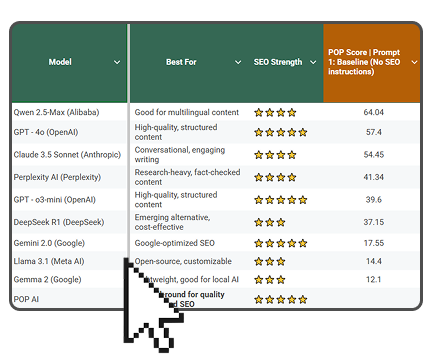
- Get the complete Gsheet report from our study
- Includes ChatGPT, Gemini, DeepSeek, Claude, Perplexity, Llama & more
- Includes ratings for all on-page SEO factors
- See how the LLM you use stacks up
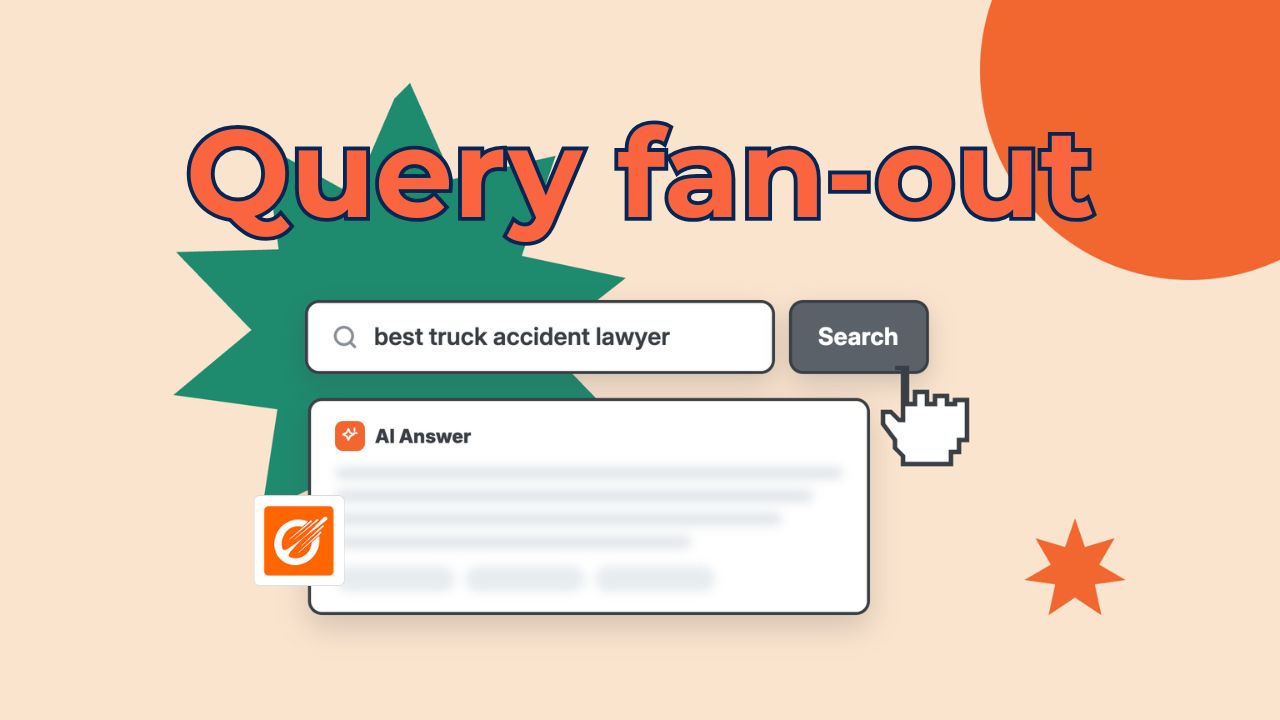
Query fan-out: the searches you never see
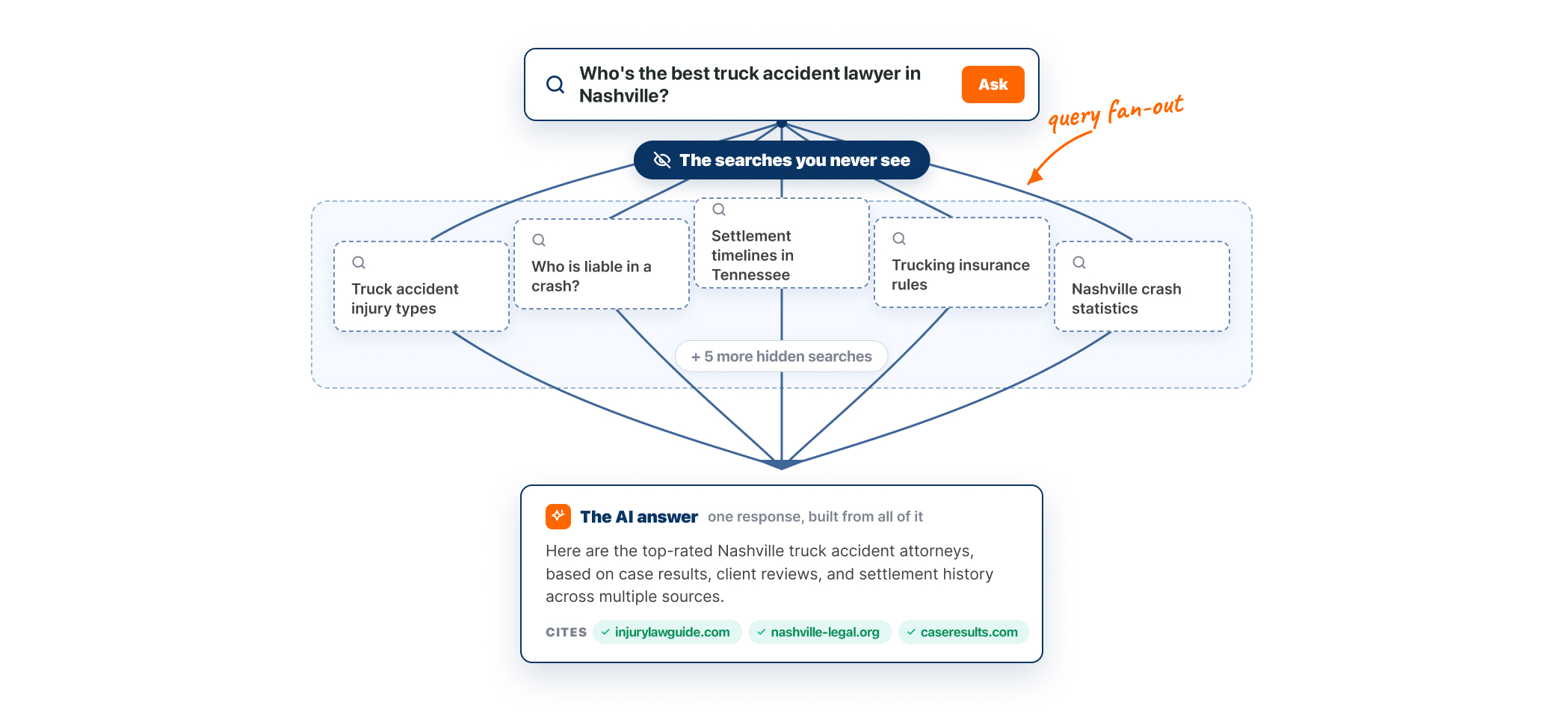
When someone asks ChatGPT "who's the best truck accident lawyer in Nashville," it doesn't just search that phrase.
It breaks the question into a set of smaller sub-queries - things like "truck accident settlement timeline," "common truck accident injuries," "who is liable in a truck accident," "truck driver fatigue accident statistics" - runs each as a separate search, pulls passages from dozens of pages, and writes one answer citing three or four sources.
The user never sees any of it. They just see the answer.
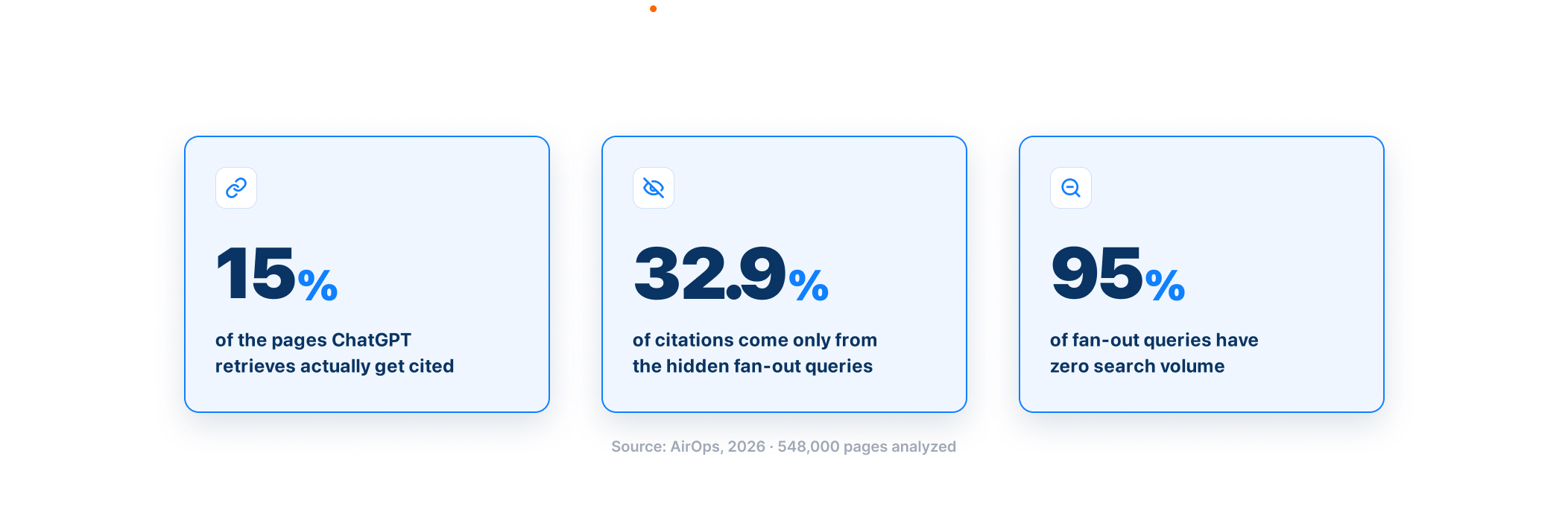
That's query fan-out. And it's not an edge case: 89.6% of prompts in the AirOps study triggered two or more follow-up searches. Fifteen thousand prompts became 43,233 actual queries. Complex questions spawn more.
Here's why that matters to you:
- 32.9% of cited pages appeared only in results for a fan-out sub-query - not the question the user typed. If your site only answers the main question, you're invisible to nearly a third of the citation surface.
- 95% of those fan-out queries had zero monthly search volume. Nobody types them. AI generates them. So they don't appear in your keyword research - standard search-volume metrics don't surface them.
Read that again. A third of the places AI looks are invisible to traditional keyword research.
You're being judged on a test you don't have a copy of.
Ranking still matters. It's just not enough.
Before anyone concludes that traditional SEO is dead: it isn't, and the same study proves it.
Pages ranking #1 in Google were cited 3.5x more often than pages outside the top 20. Retrieval rank is one of the strongest predictors of whether a page gets cited at all.
So the takeaway isn't "abandon rankings." It's this:
You need to rank well AND cover the fan-out surface. One without the other leaves you half-visible at best.
Which is a problem, because the fan-out surface is invisible to every tool you currently use.
Which is the best LLM for SEO content?
Get the full rankings & analysis from our study of the 10 best LLM for SEO Content Writing in 2026 FREE!
- Get the complete Gsheet report from our study
- Includes ChatGPT, Gemini, DeepSeek, Claude, Perplexity, Llama & more
- Includes ratings for all on-page SEO factors
- See how the LLM you use stacks up
Content silos are the fan-out strategy
This is being treated as a revelation. And for most of the industry, it is.
But for anyone who's been using POP's content silo methodology, this should sound extremely familiar.
Because that's exactly what we've been building for. For years.
Here's why our methodology maps directly onto this.
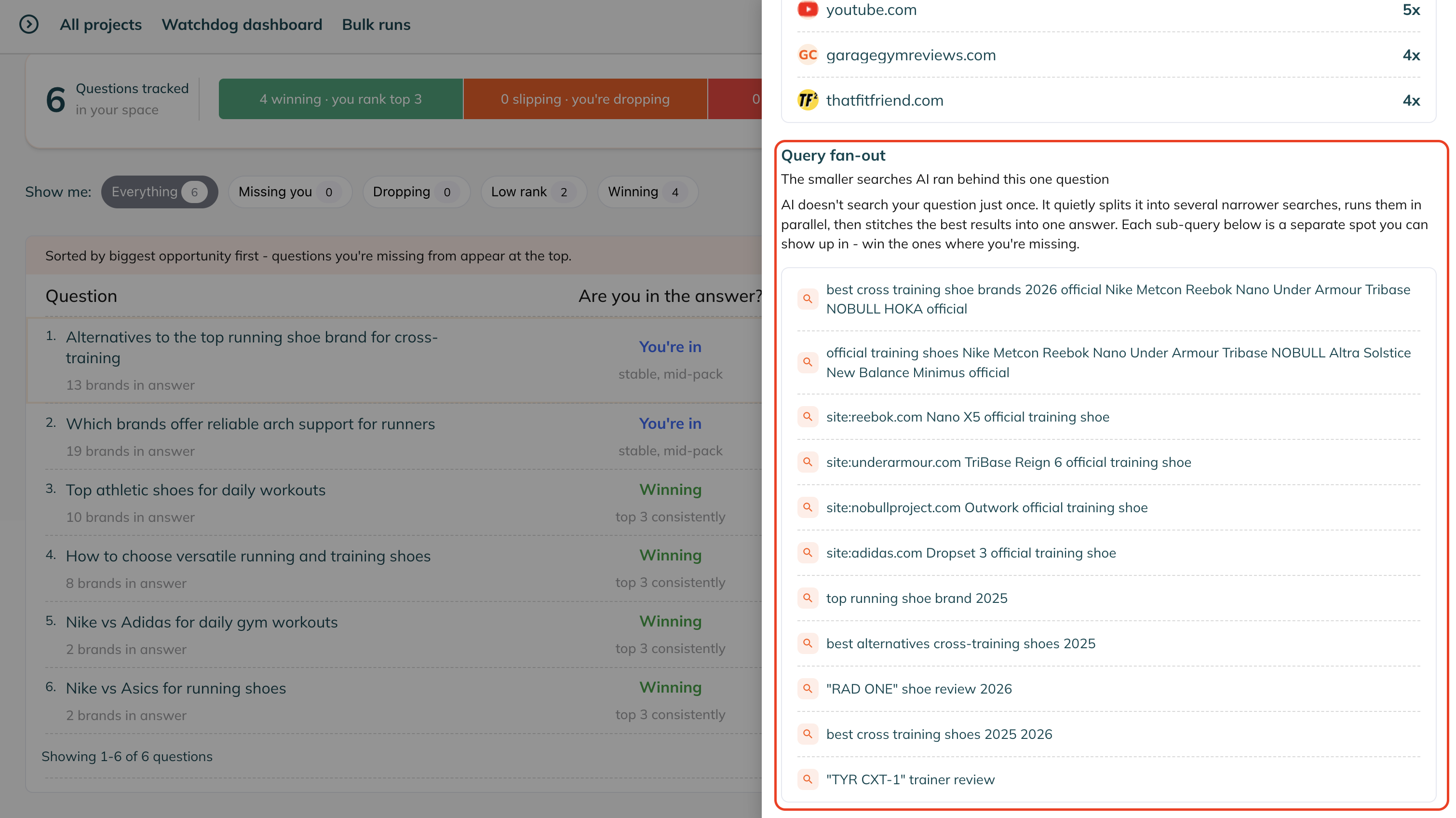
A POP content silo is simple: one Top Level Page - your money page, the commercial page you most want to rank - supported by 5-10 Supporting Pages, each targeting a closely related sub-topic. Every supporting page links back to the top-level page. Authority flows upward.
Now look at that through the lens of fan-out.
When ChatGPT breaks "truck accident lawyer" into hidden sub-queries, it's looking for pages that answer each one. A well-built silo already has one. Your "settlement timeline" page answers the settlement sub-query. Your "common injuries" page answers the injuries sub-query. Your "who is liable" page answers the liability sub-query.
Each one is a candidate for citation. Each one links back to your money page.
The structure is identical. We didn't call it "fan-out coverage." We called it building topical authority.
The methodology hasn't changed. The reason it works just got a name.
The difference: we don't guess at the sub-topics
This is where POP's approach goes further than the generic advice of "just build a hub-and-spoke."
Most content strategies start with a keyword tool, find a head term, brainstorm some related topics, and start writing. The problem? You're guessing at which sub-topics matter - and you're probably targeting some your site has no realistic chance of ranking for.
We solve this two ways.
First, the TA Score. Our proprietary Trust & Authority Score analyses which keywords a site can realistically rank for right now - based on its current domain strength, not some theoretical ceiling. We filter out the sub-topics you can't win and focus only on the ones you can.
That's the foundation of what I call the Avalanche method - more on that in a moment.
Second, RankEngine. Every page we build is scored against 100+ on-page signals before it goes live - keyword placement, semantic term coverage, schema markup, content structure, metadata, internal links. All of it reverse-engineered from what's currently winning in the SERPs for that specific topic.
Not written. Engineered.
Why the publishing order matters
The Avalanche method isn't just about what you publish - it's about the order.
We publish supporting pages first. They target lower-competition keywords. They rank faster. They start earning authority quickly.
Then that authority flows upward through the internal link structure to the top-level page - which starts climbing for the competitive keyword that drives your actual business.
This produces two things simultaneously: quick visible wins (rankings your clients or your boss can see within weeks) and a compounding authority engine that lifts the pages that matter most.
In the context of AI citations, this is doubly powerful. Each supporting page that ranks for a sub-topic is now a candidate for citation when an AI engine runs its fan-out queries. The more of those hidden sub-queries your site satisfies, the more likely your brand appears in the final answer.
The data keeps agreeing with the silo model
It's not just the shape of the thing. Three more findings from the AirOps research map directly onto how silos already work.
1. Focused pages beat comprehensive ones.
Pages covering 26–50% of a topic's fan-out sub-queries outperformed pages covering 100%. The "ultimate guide" - one enormous page trying to answer everything - is actively worse for citation. AirOps' conclusion: a page that nails one question outperforms a page that adequately addresses five.
That's the silo model exactly. Each supporting page answers one sub-topic deeply and cleanly, instead of one mega-guide answering nothing well enough to get cited.
2. Heading-to-query match is the strongest content signal.
Pages whose headings closely matched the query were cited around 41% of the time, versus 30% for weaker matches. Not domain authority. Not backlinks. Headings that match the question.
That's on-page optimisation. That's exactly what RankEngine scores against.
3. Domain authority doesn't guarantee citation.
AirOps found no meaningful positive correlation between DA, backlinks and AI citation in this dataset. ChatGPT evaluates the page, not the domain's reputation.
Which is the best news a smaller site has had in years, and it's exactly what we've been testing for across 400+ controlled experiments: the page wins, not the pedigree.
But here's the problem nobody solved
You can accept every word of this and still be stuck.
Because to cover the fan-out surface, you need to know what's on it. And 95% of those queries have no volume - so no keyword tool can show them to you.
You can build the silo. You can optimise every page. And you still can't answer the only question that matters:
Is AI actually citing me - and if not, which hidden searches am I missing?
That's why we built the POP AI Visibility Tracker.
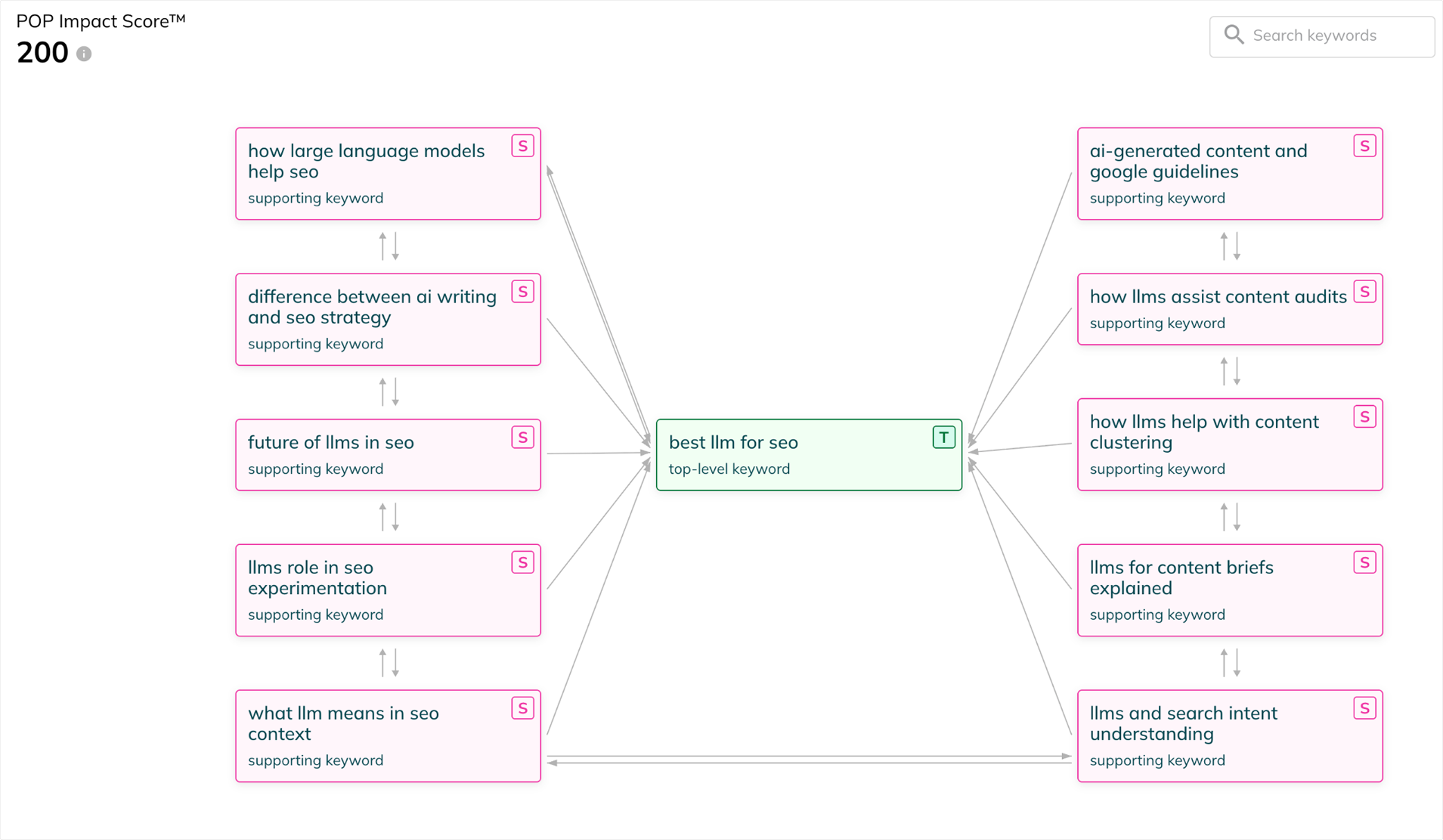
Open any question you track, and you see its full fan-out: every sub-query AI ran behind it, whether you showed up in each one, which sources it read instead, and which brands it named in your place.
The searches that were invisible are now a list. The ones you're missing are your next pages.
How to build this in POP
Where you start depends on what you've already got.
If you have pages in the topic already: start with the AI Visibility Tracker. Run your brand, see the real fan-out, see which sub-queries you're missing and who's being cited instead. Those gaps are your silo plan - built from what AI actually does, not from keyword volume that doesn't exist for these queries.
If you're building from scratch: start with POP's Keyword Research tool. There's nothing to measure yet, so map the silo first, build it, publish it - then bring the Tracker in to see whether AI picks it up.
Either way, you end up in the same loop.
Step 1 - Map the silo (Keyword Research).
Start with your main topic - this becomes your top-level page. For a personal injury firm, that might be "truck accident lawyer."
POP Keyword Research expands it into a full silo structure: one top-level page and 5–10 supporting pages. It identifies the sub-topics, scores them with the TA Score so you know which ones your domain can realistically rank for right now, and hands you a ready-to-use silo map without the manual planning.
For "truck accident lawyer," your supporting pages might include: truck accident settlement timeline, what to do after a truck accident, common truck accident injuries, who is liable in a truck accident, truck driver fatigue accidents, and truck accident evidence checklist.
Step 2 - Optimise each page (Content Brief).
Start with the top-level page first - it's the page the entire silo is designed to support.
Open Content Brief and you'll see exactly what it needs: section coverage, important terms, topical depth, overall structure. Not generic advice - it's based on what's currently winning in the SERPs for that exact keyword.
Then repeat for each supporting page. Every page gets its own optimisation path, scored against the real competitive landscape.
Step 3 - Create the content (AI Writer).
Once the brief is clear, use AI Writer to draft or expand against what POP is actually recommending. You're not guessing what to write. You're executing against the data.
Step 4 - Link it together.
Connect the pages into a real silo. Every supporting page links back to the top-level page. That's what turns a group of pages into a compounding authority structure - and what gives AI a clear topical map to follow when it fans out.
Step 5 - Check whether it worked (POP AI Visibility Tracker).
This is the step that didn't exist before.
Run the tracker again. Is AI citing you now? Which fan-out queries are you still missing? Which sources is it reading that don't mention you?
Then go back to Step 1 with real data instead of assumptions. You're not building one page. You're building a structure, and strengthening it in rounds.
The workflow in one line: Tracker → Keyword Research → Content Brief → AI Writer → Interlink → Tracker.
It's a loop, not a checklist.
SEO is already AEO
Over 400 controlled tests have told us the same thing, and the AirOps data now confirms it: the signals that win in Google are largely the signals that earn AI citations.
Pages that rank get cited. Pages with headings that match the question get cited. Pages that are focused, structured and current get cited.
Content silos were built to do all of that - years before anyone said the words "query fan-out."
What's changed isn't the strategy. It's that you can finally see whether it's working.
→ Start tracking your AI visibility
Sources:
- AirOps, "The Influence of Retrieval, Fan-out, and Google SERPs on ChatGPT Citations" (March 2026) - 548,534 pages across 15,000 prompts
- AirOps, "The Fan-Out Effect: What Happens Between a Query and a Citation" (April 2026) - 353,799 pages across 16,851 queries
- Kevin Indig, Growth Intelligence Brief #16 (March 2026) - analysis of AirOps fan-out data
- Kevin Indig, "Shorter, Focused Content Wins in ChatGPT" (April 2026) - 815,000 query-page pairs
We analysed 11 industries. One averaged a POP Score of just 14.8 out of 100. Where does yours rank?
See how your industry compares, where the biggest gaps are, and which basics competitors still miss.


Kyle Roof is a Co-Founder & Lead SEO at POP, SEO expert, speaker and trainer. Kyle currently resides in Chiang Mai, Thailand with his family.