Advanced on page SEO made simple.

Powered by POP Rank Engine™
Includes AI Writer
7-day refund guarantee
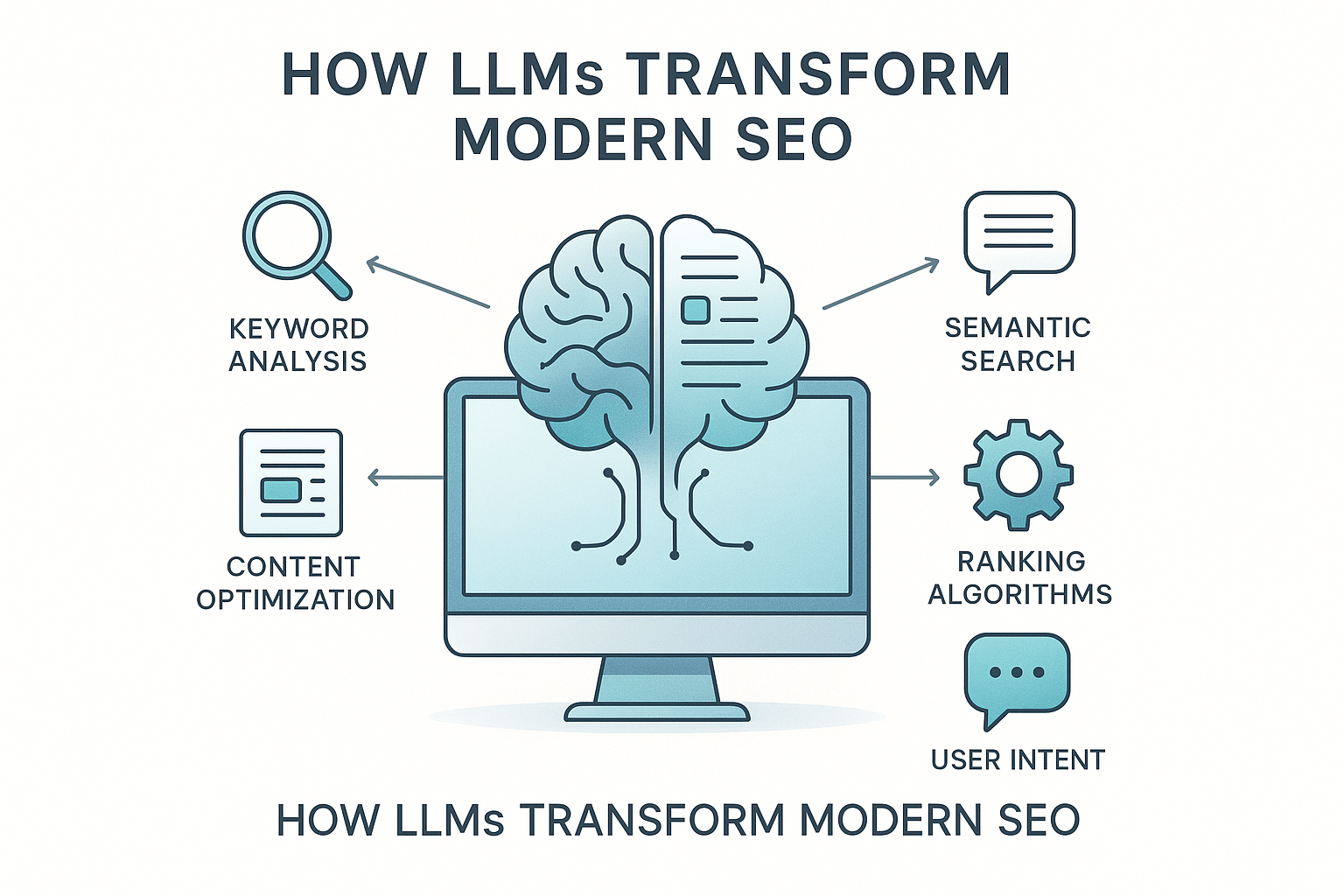
Large language models are now part of how search engines process, evaluate, and surface content. As search technology evolves, understanding what LLM means in SEO context has become increasingly relevant for business teams focused on sustainable organic visibility. These systems influence how pages are interpreted, how intent is identified, and how relevance is measured across competitive search results.
LLM SEO does not replace traditional optimization practices. Instead, it reshapes how those practices are applied. Search engines increasingly rely on language processing to understand meaning rather than relying only on isolated signals. For content teams, this creates new expectations around structure, clarity, and topical consistency.
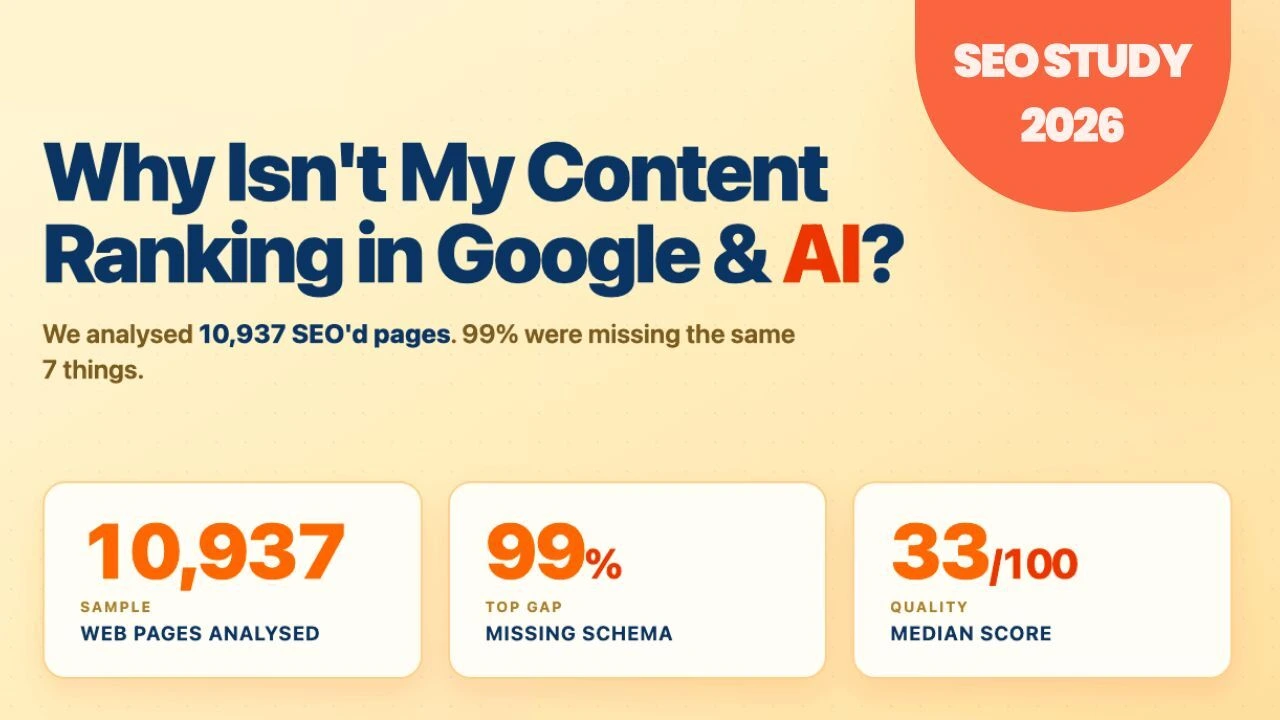
We analysed 11 industries. One averaged a POP Score of just 14.8 out of 100. Where does yours rank?
See how your industry compares, where the biggest gaps are, and which basics competitors still miss.

%20(1).png)

Which is the best LLM for SEO content?
Get the full rankings & analysis from our study of the 10 best LLM for SEO Content Writing in 2026 FREE!
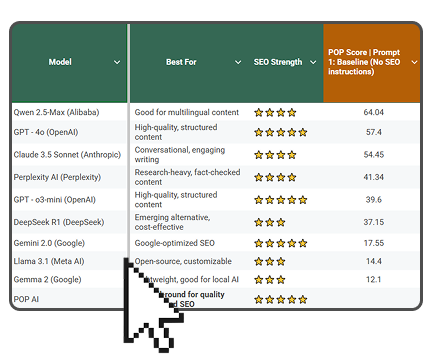
- Get the complete Gsheet report from our study
- Includes ChatGPT, Gemini, DeepSeek, Claude, Perplexity, Llama & more
- Includes ratings for all on-page SEO factors
- See how the LLM you use stacks up
LLM SEO: Understanding Large Language Models in Search Optimization
Large language models are AI systems trained to process and generate text based on patterns learned from massive datasets. In the SEO context, these models influence how search engines understand queries and evaluate content. Instead of matching pages to searches based only on keywords, search engines increasingly assess context, relationships between ideas, and overall topical alignment.
This shift changes how content should be written and optimized. Pages that rely on repetition without clear explanation are harder for language models to interpret. Pages that explain topics clearly, maintain consistent terminology, and follow a logical flow are easier for search systems to evaluate.
LLM SEO reflects this change. It refers to optimization approaches that account for how language models interpret content. This includes attention to semantic relationships, intent alignment, and how information is presented across a page.
How LLMs Influence On-Page SEO Performance
On-page SEO remains central to visibility, even as search technology advances. What has changed is how on-page elements are interpreted. Language models evaluate pages as cohesive units rather than collections of disconnected signals. This places greater emphasis on clarity, structure, and relevance.
For example, headings now play a larger role in communicating topical focus. Clear headings help both users and search systems understand what a section addresses. Supporting paragraphs that stay on topic and explain ideas directly reinforce that understanding.
Language models also assess how concepts connect across a page. When related ideas are grouped logically and explained in plain language, content becomes easier to process. This benefits both rankings and user experience.
Which is the best LLM for SEO content?
Get the full rankings & analysis from our study of the 10 best LLM for SEO Content Writing in 2026 FREE!
- Get the complete Gsheet report from our study
- Includes ChatGPT, Gemini, DeepSeek, Claude, Perplexity, Llama & more
- Includes ratings for all on-page SEO factors
- See how the LLM you use stacks up
Using LLMs within Modern SEO Workflows
Large language models are increasingly used as part of content workflows. They assist with drafting, rewriting, and expanding content, which reduces production time and supports consistency. However, their value depends on how they are applied.
A strong workflow starts with clarity around intent. Before using any model, teams should define what the page needs to accomplish and which audience it serves. This ensures that generated content aligns with real search needs rather than producing generic output.
Once a draft exists, validation becomes the priority. An on-page optimization tool, like Page Optimizer Pro, provides this validation by comparing the page against high- performing competitors. It highlights where content may be thin, where structure can be improved, or where terminology differs from ranking results.
Edits should then focus on readability and coherence. Dense paragraphs can be simplified. Sections can be reordered to improve flow. Language can be adjusted to match how topics are discussed across strong results.
This combination allows teams to benefit from automation without losing control. Language models assist with speed. Correlational data guides refinement. Human review ensures accuracy and alignment with brand standards.
Search Engine Evolution and the Role of Data-Driven Optimization
Search engines continue to evolve toward systems that prioritize understanding over
matching. Language models play a central role in this transition by enabling deeper interpretation of content and intent. As a result, SEO strategies built on static rules are less reliable than those grounded in data and observation.
Data-driven optimization focuses on what actually works in competitive environments by analyzing real search results and identifying correlations between on-page elements and rankings. This allows teams to adjust content based on evidence rather than speculation.
As generative systems and answer-focused results become more common, clarity becomes even more important. Pages that explain topics directly and maintain strong internal consistency are easier for search systems to reference and summarize. This supports visibility across traditional listings and newer result formats.
Adapting to this environment does not require abandoning proven practices. It requires refining them. Structured content, clear language, and validated on-page signals remain effective because they align with how language models process information.
Building Durable SEO Strategies in an LLM-Driven Landscape
The future of SEO will continue to be shaped by language models, but the fundamentals remain grounded in relevance and clarity. Teams that focus on producing well-structured, intent-aligned content supported by data are better positioned to maintain visibility as search systems evolve.
LLM SEO should be viewed as an extension of modern optimization rather than a replacement. Language models provide new capabilities, but performance still depends on how well content matches what search engines reward. Page Optimizer Pro helps bridge this gap by translating competitive data into actionable on-page guidance.
For teams seeking consistency across large content libraries, this approach offers a practical path forward. Draft efficiently, validate with correlational insights, refine with purpose, and measure outcomes over time. This cycle supports steady improvement without relying on short-term tactics.
If you want your content to align with how modern search engines interpret language and intent, Page Optimizer Pro helps you identify on-page adjustments backed by real competitive data. Use it to refine drafts, update existing pages, and support reliable SEO performance as search technology continues to change.
We analysed 11 industries. One averaged a POP Score of just 14.8 out of 100. Where does yours rank?
See how your industry compares, where the biggest gaps are, and which basics competitors still miss.


Kyle Roof is a Co-Founder & Lead SEO at POP, SEO expert, speaker and trainer. Kyle currently resides in Chiang Mai, Thailand with his family.