Advanced on page SEO made simple.

Powered by POP Rank Engine™
Includes AI Writer
7-day refund guarantee
Content audits used to be slow by default. Teams pulled lists of URLs, reviewed pages one by one, checked keyword coverage, compared competitors, then tried to turn that work into a practical update plan. It worked, but it rarely scaled. Modern websites publish faster than most teams can audit.
That gap is where large language models (LLMs) help. They can process large sets of pages, summarize patterns, surface gaps, and support consistent evaluations across a content library. When that model output is paired with a tool built for on-page decision-making, audits can become more repeatable and less dependent on guesswork. Read on to find out more about how LLMs assist content audits.
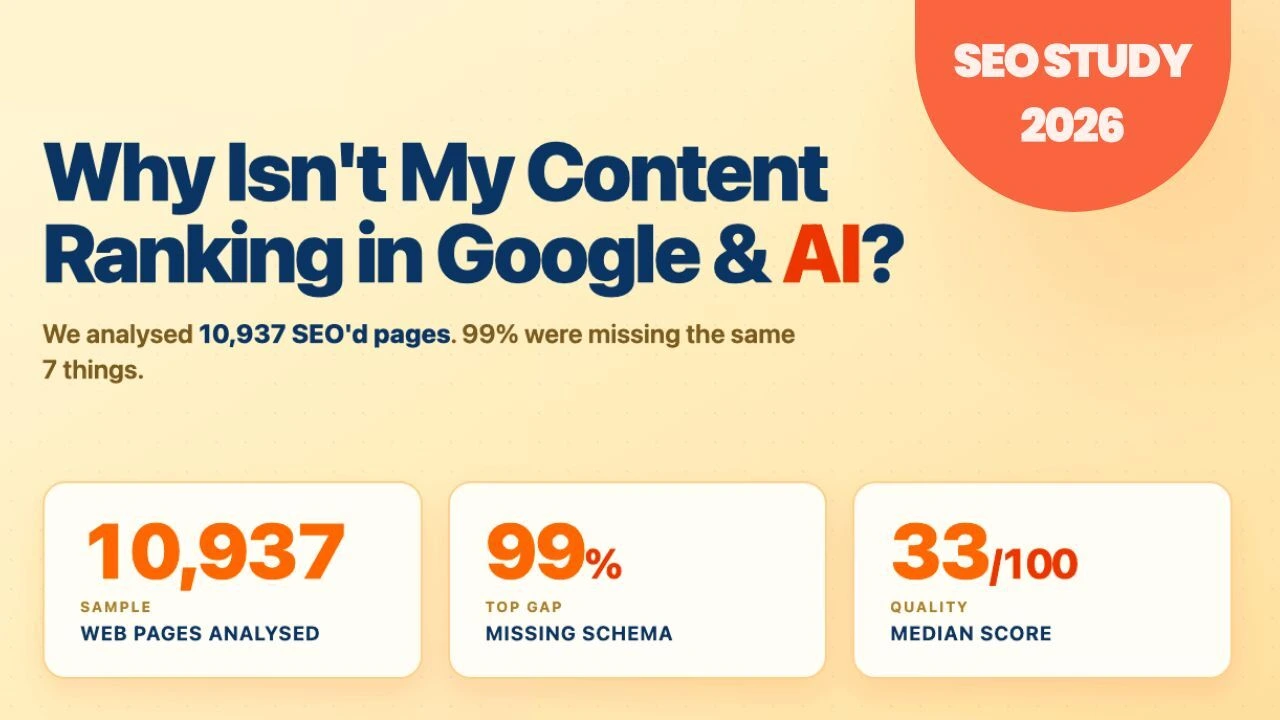
We analysed 11 industries. One averaged a POP Score of just 14.8 out of 100. Where does yours rank?
See how your industry compares, where the biggest gaps are, and which basics competitors still miss.

%20(1).png)

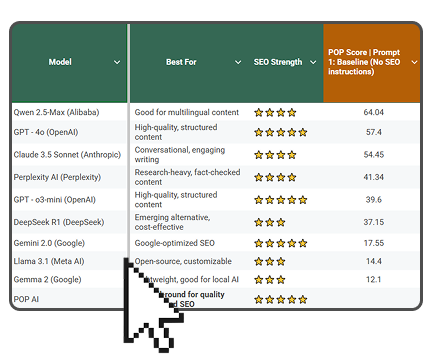
Which is the best LLM for SEO content?
Get the full rankings & analysis from our study of the 10 best LLM for SEO Content Writing in 2026 FREE!
- Get the complete Gsheet report from our study
- Includes ChatGPT, Gemini, DeepSeek, Claude, Perplexity, Llama & more
- Includes ratings for all on-page SEO factors
- See how the LLM you use stacks up
Why Content Auditing Is Changing
Auditing is no longer only about “what exists” on a site. It now includes how each page matches search intent, how well it communicates topics, and whether it supports visibility across organic search and answer-style results. Sites also face internal pressures: more content, more stakeholders, more refresh cycles, and more demand for results.
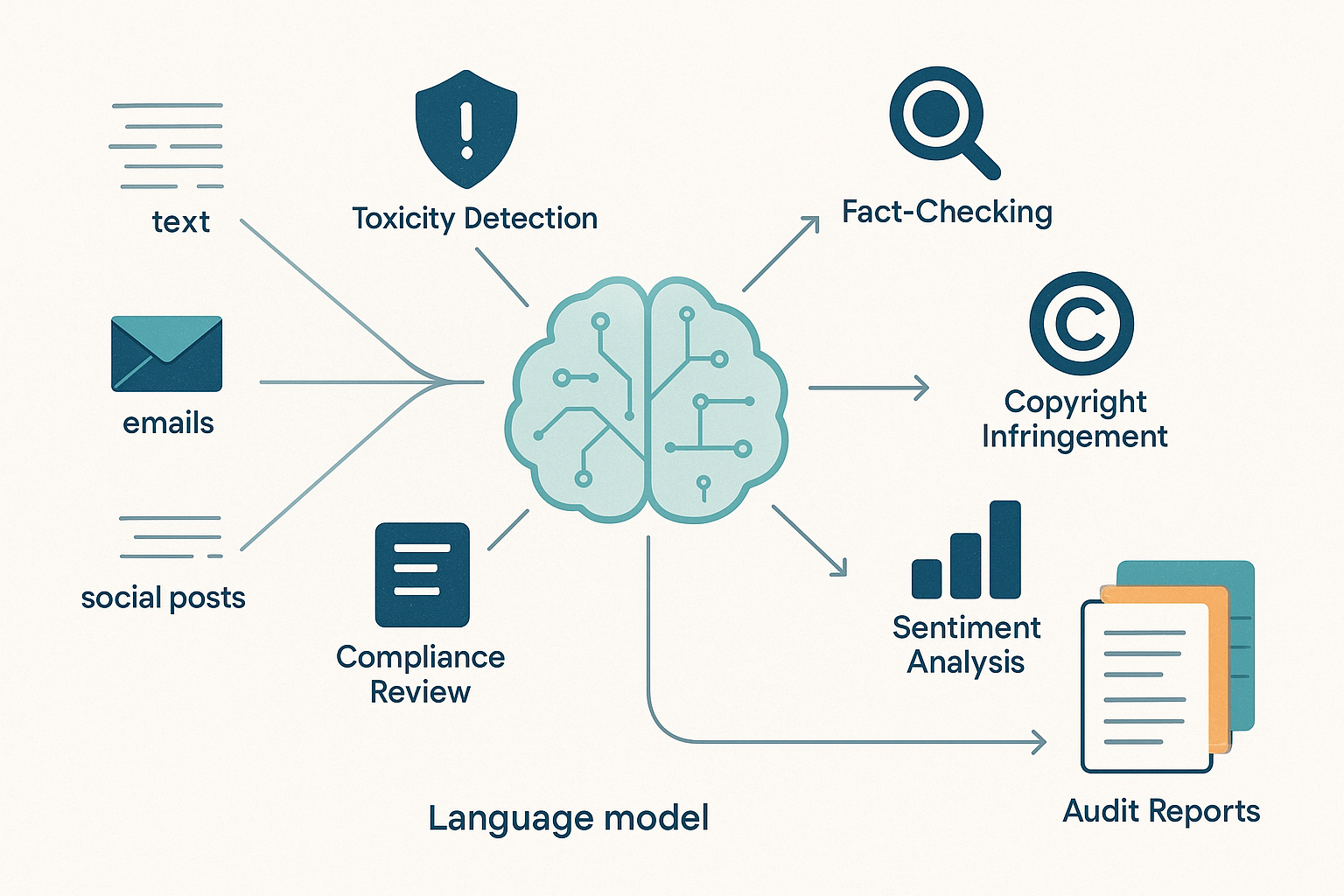
LLMs contribute to this shift by speeding up analysis while keeping evaluations consistent. Instead of reviewing every paragraph manually, teams can use language models to identify topic drift, weak section coverage, outdated claims, and formatting that hurts readability. The outcome is not a finished audit on its own. It is a faster route to the parts of the audit that matter most.
The strongest audits still rely on strategy and prioritization. LLMs help teams get to those decisions faster by turning large volumes of content into clear patterns.
What LLMs Do Well during a Content Audit
LLMs perform best when the task is language-heavy and repetitive. Content audits are full of that type of work. A language model can read a page and describe what it covers, what it misses, and where the structure causes friction for readers.
One of the biggest gains is speed. LLMs can rapidly sift through many pages and return consistent summaries, which helps teams build an inventory that goes beyond titles and word counts. That inventory becomes more useful because it includes meaning. It can also include early signals of risk, such as duplicated sections, thin explanations, or pages that target the same intent in competing ways.
LLMs also support audit planning. Instead of starting with a blank spreadsheet, teams can use model output to cluster pages by topic, intent, funnel stage, or update type. This helps prioritize work, especially when the site has hundreds or thousands of URLs.
LLM outputs are also helpful for improving consistency. Many sites have content written by different authors over time. Language models can identify tone drift and inconsistent terminology, which often affects both user trust and search clarity. When a site wants a unified voice, this kind of pattern detection saves editorial time.
None of this replaces measurement. It improves the speed of getting audit evidence into a format that an SEO team can act on.
Which is the best LLM for SEO content?
Get the full rankings & analysis from our study of the 10 best LLM for SEO Content Writing in 2026 FREE!
- Get the complete Gsheet report from our study
- Includes ChatGPT, Gemini, DeepSeek, Claude, Perplexity, Llama & more
- Includes ratings for all on-page SEO factors
- See how the LLM you use stacks up
How to Run a Visibility Audit Using LLMs and POP
A practical workflow starts by defining the audit goal. Some audits focus on rankings and traffic. Others focus on conversion or topical gaps. In many cases, the audit goal is visibility: which pages should be winning, which pages are slipping, and what changes are likely to improve performance.
From there, LLM content audits help create usable audit evidence. A team can feed a list of URLs and ask for structured summaries: what each page covers, who it seems written for, whether it matches intent, and which sections feel thin. The output becomes a starting point for sorting and prioritizing.
Once pages are grouped, a tool like Page Optimizer Pro (POP) helps validate what should change on the page. POP’s correlational technology is useful here because it highlights page elements that align with top-performing results for the target query. Instead of editing a page based only on general best practices, teams can tie updates to observed patterns in competitive SERPs.
In a typical workflow, the LLM handles the first layer: summarizing, clustering, and identifying likely issues. POP handles the second layer: turning those issues into optimization tasks grounded in data. Together, that improves both speed and precision.
A good audit workflow also includes documentation. Keep the reasoning behind each
decision: what the LLM surfaced, what POP supported, and what the team chose to implement. That record makes later measurement easier and improves consistency across future audits.
What to Watch for with Model Output and Audit Accuracy
LLMs can produce confident language even when the input is incomplete. That matters in audits because teams may treat model output as fact. The safest approach is to treat LLM output as a draft of audit evidence, then confirm it with real page review and data sources like analytics, Search Console, and ranking tools.
Another risk is oversimplification. A language model might label a page “thin” based on structure, but the page could be performing well due to intent match. Audits should never assume that longer is better. The goal is usefulness and alignment with what search results reward.
There is also the risk of uniformity. If teams rewrite everything to match the same patterns, the site can lose clarity in positioning. The key is focusing on what correlates with performance, but editorial judgment is still needed to maintain brand voice and reader trust.
Finally, audits should avoid producing work without a measurement plan. Each update should have a clear target: visibility improvement, better intent match, reduced cannibalization, stronger topical coverage, or improved engagement.
Turning Audit Findings into Repeatable Wins
The value of auditing comes from what happens after the analysis. A strong audit ends with a prioritized set of updates that a team can implement in cycles. LLMs make that easier by helping teams move from raw content to a structured view of what needs work.
Over time, this creates a repeatable system. The team performs a visibility audit at a set cadence, uses LLM outputs to identify patterns, validates and optimizes pages, then measures outcomes. Pages that respond well can be used as internal examples for future updates. Pages that do not respond can be reassessed for intent mismatch, competition, or technical blockers.
This is also where CTA placement matters. Readers searching “how LLMs assist content audits” are often trying to improve their audit process and need a practical next step.
If you want to turn content audits into clear on-page actions backed by competitive data, Page Optimizer Pro helps you validate what to change and prioritize updates that align with real ranking patterns. Use POP alongside LLM-assisted auditing to move faster and measure results with confidence.
We analysed 11 industries. One averaged a POP Score of just 14.8 out of 100. Where does yours rank?
See how your industry compares, where the biggest gaps are, and which basics competitors still miss.


Kyle Roof is a Co-Founder & Lead SEO at POP, SEO expert, speaker and trainer. Kyle currently resides in Chiang Mai, Thailand with his family.