Strategies for Personalized Landing Pages and SEO with Ahmed Ezat
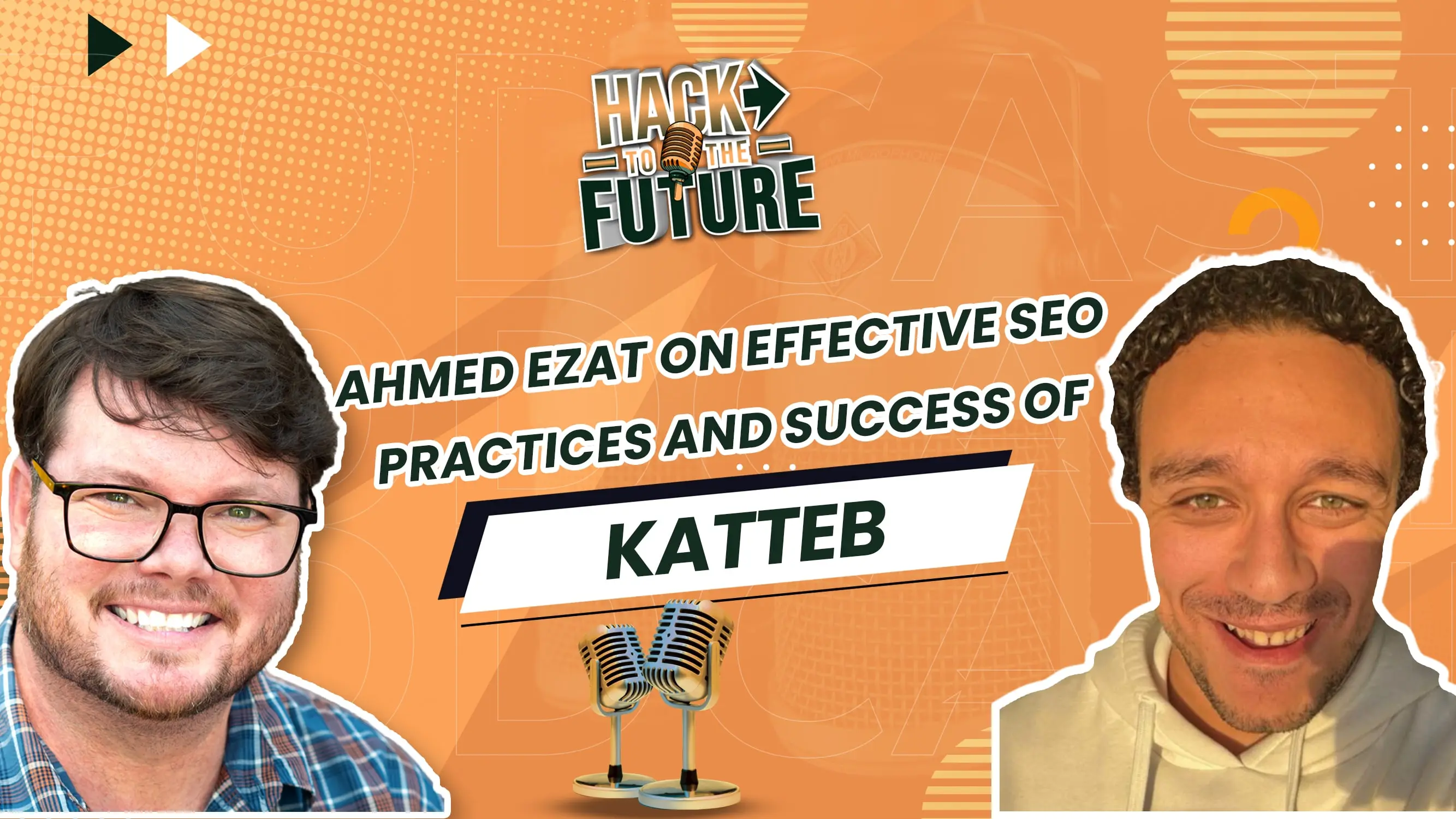
In this episode of "Hack to the Future," Kyle Roof interviews Ahmed Ezat, founder of Katteb.
Ahmed delves into the strategy of creating comparison pages with competitors to validate market presence and boost traffic. He also explains the development and success of Katteb, an AI writing tool designed to fill a market gap with its reliable, fact-checked content. Additionally, Ahmed discusses the benefits of building a native affiliate program to enhance SEO and increase organic traffic. He highlights the effectiveness of personalizing landing pages for top affiliates to significantly boost conversion rates.
TAKEAWAYS:
Ahmed Ezat emphasizes creating comparison pages with competitors to validate market presence and boost traffic.
He developed Katteb, an AI writing tool, to fill a market gap with reliable, fact-checked content.
Ahmed suggests building a native affiliate program to enhance SEO and increase organic traffic.
Personalizing landing pages for top affiliates can significantly boost conversion rates.
SEO for tough-looking keywords in the SaaS niche involves targeting experiential keywords that provide a seamless user experience.
User experience can sometimes be more important than content for certain keywords, impacting SEO rankings.
Ahmed recommends creating a lot of YouTube reviews, focusing on quantity over quality, to spread brand awareness.
Native affiliate programs, hosted on your domain, can drive high-quality traffic and validate your presence in the market.
Using tools like VWO to personalize landing pages for top affiliates can lead to a significant increase in conversion rates.
SEO is a long-term commitment, and setting realistic expectations with clients is crucial to avoid misconceptions about the process.

All right, welcome to Hack to the Future with Kyle Roof. I am Kyle Roof. And today we have Ahmed Azat, who's the founder of Katteb.com, an SEO S7 agency. Ahmed, thanks for being here.

Thanks, Carl. Thanks for having me.
Ahmed, I know that when people start SEO, especially for like a new site, there's kind of the idea of kind of avoiding difficult keywords. And I think you take a slightly different approach and go after what you call tough-looking keywords or the looking tough keywords. Can you walk us through that?
OK, I would like to mention that this approach is solely based on the SAAS niche. Yeah, it will not work for every market. So I will just say what I have experienced with this in SAAS. So yeah, let me tell you more about it. When we are talking about looking at tough keywords, these are keywords that Initially, when you analyze it using SEO tools like Ahrefs or ACMrush, they will typically have a difficulty rating between 30 and 60. So at first glance, you might think that they are fairly difficult to rank for because they are dominated by large brands. However, if you go deep and start to analyze the top-ranking pages, you will discover that it's not as difficult as it seems. So to give you a real-life example because we did this, if you analyze a keyword like SEMrush domain authority checker, you would find its difficulty is around 45, which is fairly high in terms of keyword difficulty scores. However, when you analyze the top 10 ranking pages, you will find that many websites are ranking without any backlinks whatsoever. What they are doing is that they are simply providing the same user experience that people expect when clicking on a page ranking for such a keyword. So when we are talking about the domain authority checker tool, a simple URL field where you can add your domain URL and a way to show results instantly using Azure source or something like that. So if you are building a new SEO tool targeting a keyword like this one, it would, it could easily get you around 20 or 30 clicks per month, even if this number is so low, but those are all potential subscribers who could subscribe to your software if it's good enough. So this is how the looking tough keywords way works. You, by analyzing other brand keywords try to find keywords that provide experiences, not content. We are not writing content for these pages. We are just providing a similar user experience, you can easily rank for it. And I just gave you a real-life example because we did this test in our software, Katteb, and we went before we did it we started to analyze other competitors and other niches to see if it works. And yeah, we discovered a lot of keywords that websites not well-acknowledged websites are ranking for without even backlinks, and they are just. trying to make use of other trends recognition.
So that's pretty interesting. If you look at something like an SCM rush or an age rest or tools like that, they often categorize keywords by informational or transactional, for example, and you're kind of talking about a different category experiential, if you will. What's like an example of like, you don't need to give a keyword exactly, but what's a page that's like an experience page, and what's on that page?
I can give you a real-life example, something like, yeah, no, no, it's okay. But even for something like a free article writer, people are looking for such keywords a lot. And what you expect from a free article writer landing page.
Okay, I don't want to out any of your client terms.
You can just think about it right now. You would expect no signups. You can just land on the page add your title and click on create and it starts generating content. If you are providing this user experience with a better output than your competitors, you might have a chance to rank for this keyword. I'm not saying that it will be easy. I'm not saying that you will outrank top players, but you will be there and you will start gaining some traffic. So it's fairly easier than starting to write a huge blog post about the top 10 AI writing software and trying to rank above Mashable or HubSpot or something. Yeah, it's fairly difficult. But when you do this tool, and even if you attach this keyword to a brand name, like the SEMrush example we just talked about, yeah, it would be much easier because there are no, besides SEMrush, there are not many websites or targeting this keyword.
I love that a lot. You know, and that explains some things too. And you see those types of pages that, you know, they're relatively thin, if you will. There's not a lot of content on them, but they seem to rank very, very well. And it's the idea is this an experience webpage where essentially somebody's looking for that experience, they're landing there, and then they're able to do that thing.
You can see this in tools like online signature tools when you just have to sign a PDF or something. They don't have content. It's just to experience. So if you try to rank for this keyword by writing an article, you wouldn't rank for it. Even if you got tons of backlinks for it, it wouldn't rank.
Yeah. Wow, that's pretty sharp. I like that a lot. That's pretty sharp. I like that a lot. Yeah, I like that a lot. Within your agency, so somebody hears that, right? They hear you talk about that, and then they want to come to your agency, SCOS7. And how do you kind of set reasonable expectations then if maybe there isn't one of these options or it might take a little longer. How do you kind of set that expectation for people when they might have some misconceptions or preconceived ideas about SEO?
I always say that we are working in the hardest field of digital marketing. Nothing comes close, actually, because we are always trying to promises based on some research and some expectations, but it's not rocket science. It's not a story. It's not a solid science and you can't guarantee any result. So one of the most common misconceptions about SEO is that it's a one-time job and it can be done one time. and you are done. I usually say SEO is like marriage. You can be single as long as you want, but when you decide to get married, it's a lifetime commitment. So if you are not ready to commit to SEO or SEO for your business lifetime, you are not ready to start working on SEO or improving your website search engine rankings. So what I do is that we try to vet our clients as much as they do with us. And we do it based on their expectations and how they understand the market landscape, and the competition landscape. So if their experiences are not relevant to their niche or budget, we try to work with them through what we call a competition analysis. So I would say that I will jump on a meeting with a client and show them how their competitors, or how long it took their competitors to rank for specific terms or generate a certain amount of traffic or even build a certain amount of backlinks because actually, people think that this is a one-time job, and once it's done, it's done and we can stop doing SEO and we can save this money for any other aspect. But, yeah, we would show them how long it takes and how long it took their competitors to reach this level, alongside the average time to get your content indexed on Google and the working hours of our team when we are trying to audit things, their content, and so on. So yeah, we try to walk them through this and if they are not happy about it, we politely say that we will not be a good fit for you guys. And you might consider going after direct ads or something. It will get you much more faster results. But actually, SEO is a long-term game. If you are not ready to commit to it, we will not be able to help you.
Got it. Now you have Katteb, which is an AI writing tool. Did building this tool come out of something I needed from the agency, or was it filling a gap in the market?
Both. Yeah, we, as an SEO agency are responsible for content generation for many of our clients We were wondering if there's anything that could accelerate the process of content outline or brief or something, and even content generation itself. However, there was a market gap because there are a lot of content types that don't require a long time researching and doing interviews with other people to get some information, you can just fill the gaps using AI. So yeah, there was a market gap and we needed this inside our agency. And this is the main driver behind Katteb actually, that we, we were building our businesses and we used to spend a lot of time working on content. And actually, we started in 2021 before ChadGPT and so on. So it wasn't the hype about AI was not as much as it is now. So yeah, it was a much new thing to have. The first tool I saw that was providing such software, was called Snazzy as I remember, and it was acquired afterward by Unbounce. So yeah, once I saw this tool, I said to myself, yeah, we can do this. Yeah, we have to do this actually, and we have to do it better, and we have to see how our clients are looking to improve their content generation and see what we can add to this technology to get the same results that we are getting ourselves by writing content by the help of our copywriters. And it all started like this, yeah.
For people who haven't seen the tool yet, give us the 30-second elevator on what it does and how it fits within the work.
Yeah, actually what we always say is that we are the first fact to check the AI writing software. What we are trying to do is give you reliable content. When we started before ChatGPT as I said, there was no other AI writing software that could provide you with content based on reliable sources with citations. You would only have, you would always have to fact-check content by yourself and see if the information inside it is realistic or not. So what we tried to do is that we, did this using machine learning. So we could make sure that generated is fact-checked and reliable based on credible sources. So what we do and what we pride ourselves on is that we are the most accurate AI writing software in the market right now. Yeah.
I love that. That is such a huge issue that's come up with AI is just that it hallucinates. It makes stuff up. And to have a fact -check -based writing tools, that's pretty awesome. You've done some cool things, I think, for the growth of the software. But before we get to those, I want to play a little game that we call Talk Me Out of Doing Something. You're based out of Cairo. I'm a big traveler, and seeing the pyramids and. The Valley of the Kings is on my bucket list, but talk me out of doing that. What's something else that I should do in Cairo that many people don't know about?
You have to try local food for sure actually yeah our local food is very unique at the beginning you might get surprised of how the test is but once you do it once you will never forget it yeah so you have to try our local food especially koshary yeah yeah koshary koshary yeah it's yeah the only
The first dish, what should I go for?
Cochure
I'm actually, I'm not familiar with that. What is that?
It's pasta, rice, lentils, and hummus, and it is all made together with red sauce. It tastes great.
Awesome. Awesome. I'll do it for sure. We chatted a little bit. You've got some cool ways that you've been able to grow your tool. Everyone has, I think, when they start a SaaS tool, and they have an idea, and it's a good con to put together, there's kind of a, OK, now how do we get people? How do we get this out there? And one technique that I know that you've talked about, I would call it almost like poking the bear. Those are my words, not yours. But the idea of going after a brand, that's bigger than yours. Can you kind of go into how you approach that kind of going after a particular brand?
Yes, so I wouldn't say that we are poking them. It's something that people are overlooking when they are starting their own SAAS. So I'm saying that we are trying to get noticed. So let me tell you more about it. What we do is that we try to create comparison pages targeting the top three to five competitors in our niche. So when you try to show how your solution might be better in certain ways than your competitors, I rank for a keyword like SEM RRush'sbest domain and checker as an alternative for something like that. And you are trying to make those competitors aware of your presence or your existence. So, and I, as I told you, I wouldn't say, poking them or provoking them, but it does trigger them to take action. So not all will respond, if you are targeting around five to seven competitors with your comparison alternative pages, not all of them will respond, but some of them will do exactly what you did and they will create a comparison page to showcase how they are better than you. So if you are the underdog here, if you are just starting, you will come out with a credible mention from their authoritative website alongside free. Yeah, yeah. Which typically leads to generating some branded searches. Yeah, yeah. It validates you in the market. Exactly. And it's, yeah, and gets you some branded searches and other than the high-quality traffic. So people start to know about you more and they are not any people. They are your targeted audience.
It's validating. If they're so huge and they're going to start talking about it, it's validating.
So it's like, throwing a bait in the sea, trying to catch some large fish. So yeah, yeah, it works like this. You're trying to create comparison pages between you and your competitors. And once they notice this, most of them, they will do the same. They will put you in comparison, trying to showcase how they are better than you. And you will get much better benefits from this actually than your competitors.
Sure. You've also had some good experience with reaching out to YouTubers or YouTube influencers. What have you done with that?

Yeah, I'd love to chat with anyone to hear about an idea they're cooking up or any way I can help, again, launch a business or even optimize their business. But yeah, you can reach out to me via email, Jeffrey@vaultinnovation.com. Go to the website vaultinnovation.com. We have resources on there for entrepreneurs to look at, to help them out with some of the topics we've been talking about, but obviously can ping me on LinkedIn as well. So.
Does that cost a lot?
And I would recommend it does not usually cost a lot of time. It's based on the YouTubers that you are reaching out to. Yeah, some YouTubers might ask for $5,000 up to $10,000 for a certain review. But when we are promoting our software, we don't look for quality. We look for the quantity because we see this more to be as a branding marketing strategy, not a direct conversion one. We need, when people look for our brand name, Katteb, to see a lot of reviews, not one or two high-quality reviews. I prefer this actually, especially in the starting three to six months. You have to spread the word about you. People have to find you everywhere when they are looking online. And people actually in the SaaS business, are always looking. On YouTube, they are always searching for reviews. They are always searching for testimonials and so on. So yeah, having a lot of reviews is much better than having two or three high-quality reviews. So what we were doing is that we were trying to reach out to a large number of YouTubers and get as many reviews as we could, not spending too much. Some of them actually might just get a free lifetime account in exchange for a review. But most of them actually, yeah.
Okay. Then the last thing you've done that you've had success with is a native affiliate program. So I assume that that's an affiliate program that you build rather than using, say, a Clickbank platform to get people in. What have you done with that?
Okay, this is something that I knew about from a competitor. I wouldn't, or I can just mention their name. I have nothing to hide about it. They are called writers. Yeah. And they did it before us. And I found it actually to be a very good growth hacking tactic. So it's all about hosting the affiliate program on your domain rather than using a third-party tool like Lake Bank or ShareASale or something like that.
So it's all about creating an affiliate URL structure using parameters, something like domain.com ref equals your affiliate IDs or something. So basically this domain is this URL structure. When clicked anywhere around the internet, it redirects people with a 301 redirect to your homepage. So it passes link juice and authority and so on. So this is actually one of the most powerful techniques that we have used and it has helped us a lot because right now we are actually getting around 30 to 40,000 monthly organic clicks from Google using this tactic. And I have to say that when people promote this URL, they don't even think about that they are giving you a backlink or something. What they are thinking about what they are trying to get your link out there to generate more referrals and that could lead to commissions. So yeah, it's a great gross hacking technique that works and it worked for us in terms of SEO, because actually, we received a lot of backlinks through this tactic. And also in terms of revenue for sure. Yeah, it drove a lot of customers to our website.
If I can understand it just a little bit better. So the idea is, let's say I become an affiliate. Is there a page that's, you know, slash Kyle and then my affiliate, and then that page 301s to the homepage? Is that the idea or just the URL itself redirects?
Yes, once you, yeah, yeah, it's a URL itself, it redirects, but I will tell you once you sign up, you wouldn't have to apply for an affiliate program. Once you sign up and log into your dashboard, you have your affiliate URL just clear in front of you. So yeah, this is one also of the main differences between using third-party solutions that people will have to apply fot. And you'll have to accept them one by one. We don't do this. We give our affiliate URLs to everyone.
Okay.
If you are willing to promote us, why we would ask you for some information first. If you are getting us users, come on, man, let's do it. So yeah, what we were doing is that once you sign up, you receive your affiliate URL and you can start promoting it.
Is it expensive to run your platform like this or is it fairly straightforward?
No, we are a native BHB software. It's just a simple function, yeah. Doesn't cost you anything.
And then you have to build the back end, I would imagine, to track the sales and stuff like that.
Yes, the tracking. Yeah, it's a tracking system. Yeah, you have to build it. It will cost you many hours, but it won't cost you money.
Sure. that's awesome. Well, those are fantastic. I loved it. I loved all of that. That was great. If people want to get in touch with you, how can they do that?
Yeah. Thank you. They can get in touch with me on Twitter, X. It's Twitter.com/Ahmad Katteb, and on LinkedIn too.
And katteb is K -A -T -T -E -B, right?
And katteb is K -A -T -T -E -B, right?
And I would like to add something for our listeners who are listening to this podcast about the native affiliate program. Also, I would like to say that we did something with it, some experimental it worked well actually for us. Since we have our unique affiliate IDs, we can track our top affiliates. So we could see who is bringing a large amount of traffic, but not converting as much. So we use the tool called VWO. It's a tool for, I don't know if you know it or not, but actually, it's a tool for optimizing user experiences based on certain criteria. So what we did is that we would be able to personalize our landing pages for each affiliate. So if you Kyle are referring some users to us, anyone would click on your affiliate URL and land on our website, we could greet them by showing them a pop-up saying, join Kyle today with a 10 % discount or something, and give them a promo code with your name. So this is attaching your name to your audience because logically they should know about you since they clicked on your affiliate URL. And people started to see that this is a personalized experience that you are giving them something instead of just landing on the same landing pages that are are shown to everyone getting to our website. So we use this to personalize the experience of browsing for affiliates. And it leads actually to a huge increase in conversion rate. Yeah. And we tried it and some affiliates, we tried it actually with three or four affiliates of our top affiliates and they saw a huge spike in their conversion rates jumped up to 5 % or yeah.
Super Super sharp. Makes sense. Well, this was fantastic. Tons of excellent information. I want to thank you so much. And thank you everyone else for listening to Hack the Future. We appreciate you being on. Ahmed, we appreciate you as well. And we'll talk to you next time. Thanks so much.
Thank you,. Bye bye.
Listen on: